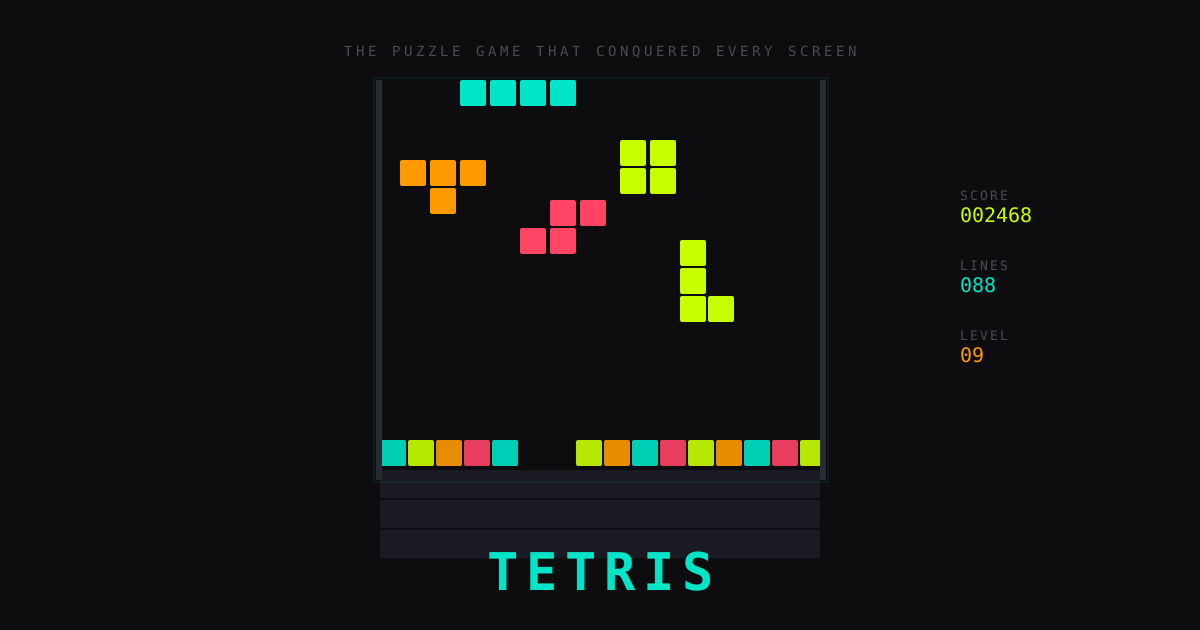
Tetris: The Puzzle Game That Conquered Every Screen
The complete history of Tetris — from Alexey Pajitnov's 1984 Soviet creation to the Game Boy version that defined portable gaming. Piece mechanics, the licensing war, the competitive scene, and where to play Tetris today.
Tetris: The Puzzle Game That Conquered Every Screen
There is a reasonable argument that Tetris is the most played video game in history. It has appeared on more distinct platforms than any other title — from the original Soviet Electronika 60 terminal to calculators, digital watches, oscilloscopes, and eventually every major gaming platform in existence. The mechanics have not changed in forty years because they do not need to.
This is the full story of how a Soviet mathematician’s experiment in geometric logic became the defining portable game, survived one of the most complicated software licensing disputes in early gaming history, and built a competitive scene that is still growing.
The Creation: Moscow, 1984
In June 1984, Alexey Pajitnov was working at the Dorodnitsyn Computing Centre of the Soviet Academy of Sciences in Moscow. His work involved artificial intelligence research, but his real interest was puzzle games. He was particularly fascinated by pentominoes — geometric puzzle pieces made from five connected squares.
Working on an Electronika 60 terminal (a Soviet clone of a PDP-11, running text-mode graphics), Pajitnov simplified pentominoes to four-square pieces — tetrominoes — and built a program around a single mechanic: pieces fall, the player rotates and positions them, and completed horizontal lines disappear.
The first version had no scoring, no levels, no game-over state. It was a pure mechanical loop. Pajitnov passed it to colleagues, who lost hours to it immediately. He added the game-over condition (stack reaches the top), which transformed a toy into a game.
The name came from combining the Greek prefix tetra (four) with tennis, Pajitnov’s favorite sport. Within months, the game had spread across the Soviet research network, passed between institutions on floppy disks. Pajitnov, as a Soviet state employee, did not own the rights to what he had made — those belonged to the state.
The Seven Pieces: A Perfect System
The seven tetrominoes are one of the most studied examples of mechanical completeness in game design. There are exactly five ways to arrange four squares in connected patterns (allowing rotations and reflections). The choice of seven pieces — I, O, T, S, Z, L, J — creates a system with specific properties.
The I-piece enables the highest-scoring move: placing it to clear four lines simultaneously, called a Tetris. It is the rarest and most valuable piece, and its long shape creates the strategic tension of the game — you hold space for it, and it either rescues you or arrives too late.
The O-piece is the most neutral, filling two columns and two rows with no rotation value. The T, L, and J pieces are workhorses, filling awkward gaps. The S and Z pieces are the most dangerous — their offset structure creates overhangs that are difficult to resolve cleanly.
The seven pieces are distributed in what official Tetris implementations call the “7-bag” randomizer — each bag contains exactly one of each piece in random order before reshuffling. This guarantees no drought of any piece beyond 12 pieces, which prevents the frustrating randomness of earlier implementations.
Classical NES Tetris, notably, uses a different system — the pieces are truly random with a small duplicate-prevention mechanic — which creates genuine droughts and demands different adaptive strategies.
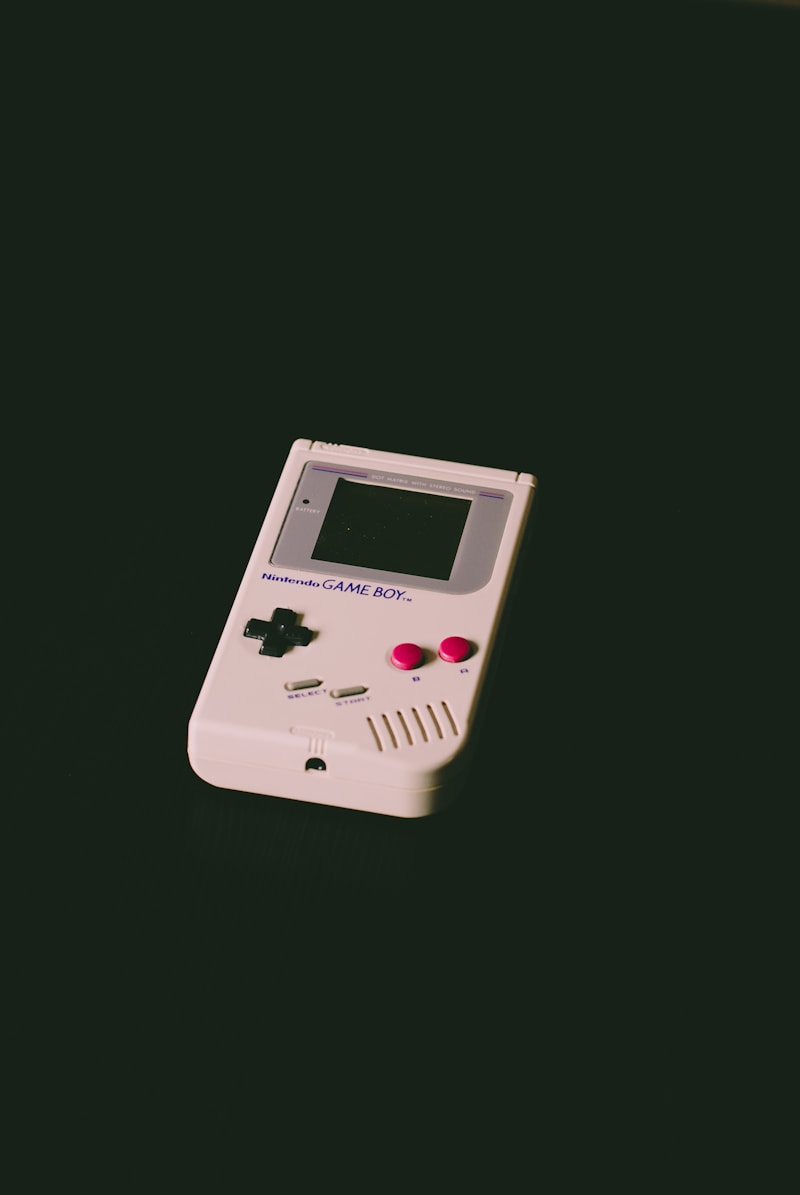 The original Game Boy (1989) — the hardware that made Tetris a global phenomenon. Bundled together at launch, the pairing defined portable gaming for a generation. Photo: Nik / Unsplash (Unsplash License)
The Licensing War
The history of how Tetris left the Soviet Union and reached Western consumers is one of the most complicated legal and commercial stories in early gaming.
In 1986, a Hungarian software distributor named Robert Stein encountered Tetris while visiting a trade show in Budapest. He contacted the Soviet software agency ELORG to negotiate rights. Without waiting for confirmation, he sold rights he did not yet have to Mirrorsoft in the UK and Spectrum HoloByte in the US, who published PC versions.
By 1988, Atari Games (the arcade division, legally separate from Atari Corp.) had acquired rights from Mirrorsoft for arcade and console distribution. They were already manufacturing Tetris arcade cabinets.
Nintendo’s Henk Rogers traveled to Moscow in 1989 — during the final days of the Soviet Union — to negotiate directly with ELORG. His goal was the handheld rights for the Game Boy. During the Moscow meetings, it emerged that Atari’s console rights were based on a contract that ELORG had never actually signed. Nintendo left Moscow with the handheld rights legitimately secured and eventually the console rights as well.
Atari’s already-manufactured NES cartridges were recalled. The legal battles continued for years.
The consequence: Nintendo bundled Tetris with the Game Boy at its North American launch in June 1989, rather than the action game they had originally planned. The choice of Tetris over Super Mario Land as the pack-in game reached a broader audience than any Nintendo platformer would have.
The Game Boy Version: Why It Defined the Franchise
The Game Boy Tetris (1989, Nintendo) is not the most visually accomplished version of the game. The 160×144 pixel screen, four shades of greenish grey, no color — it is among the most technically constrained implementations of the game that exists.
It became the best-selling Game Boy title of all time — 35 million copies sold — because the constraints were the point.
Tetris requires no color to be legible. The piece shapes read clearly in monochrome. A session can last two minutes or two hours without either feeling incomplete. The game’s binary tension — controlled descent versus impending collapse — works at any screen size. The Game Boy’s battery life (approximately 35 hours on AA batteries) meant extended play without infrastructure.
The Game Boy Tetris also introduced Tetris-specific music to most Western players: Korobeiniki, a Russian folk song arranged by Hirokazu Tanaka, which became so associated with Tetris that it is now effectively the game’s theme.
Two-player link cable mode, allowing competitive Tetris between two Game Boys, was one of the first successful local multiplayer experiences on handheld hardware.
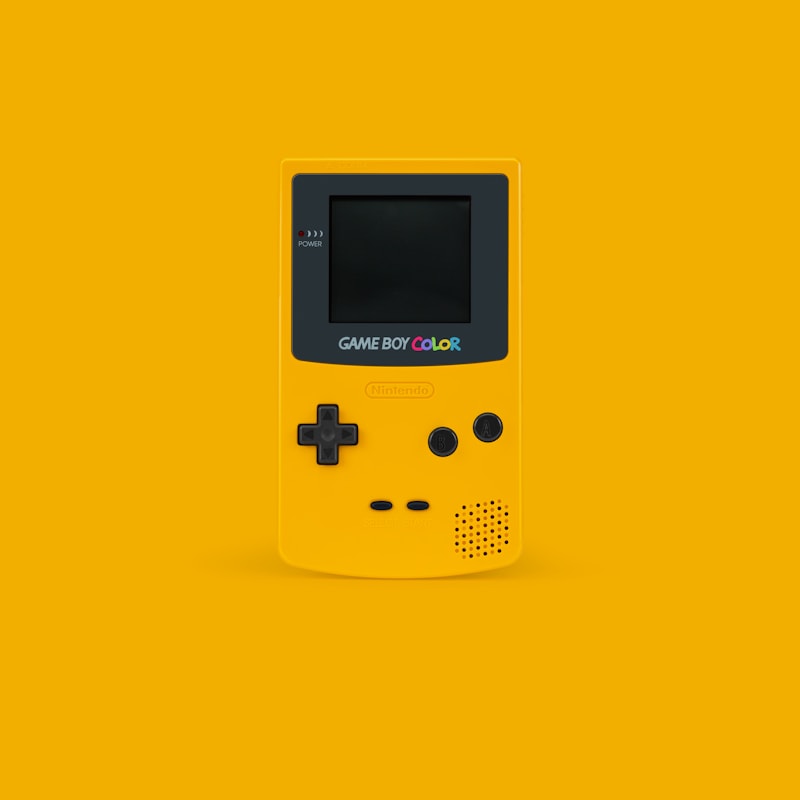 The Game Boy Color (1998) brought improved hardware to the same iconic form factor. Tetris DX, the color version, remained one of the most-played titles on the new hardware. Photo: Mike Meyers / Unsplash (Unsplash License)
NES Tetris: The Competitive Standard
While the Game Boy version drove mainstream adoption, the NES version of Tetris (1989) developed a different legacy — it became the format for competitive classic Tetris.
NES Tetris runs at speeds that eventually become physically unmanageable. At level 18, the pieces fall fast enough that only the most practiced players can consistently handle them. At level 19, the fall speed reaches the so-called “death speed” where pieces move one row per frame at 60fps. At level 29, pieces fall so quickly that the standard controller polling rate becomes a limiting factor.
For years, level 29 was considered the hard ceiling. In 2020, competitive players — using a technique called “rolling” (drumming multiple fingers across the back of the controller) — broke through it. The rolling technique generates inputs at rates impossible with a thumb grip, allowing level 30, 40, and beyond.
In December 2023, 13-year-old Blue Scuti became the first person to reach level 157, triggering a kill screen in NES Tetris that had never been reached before. The moment was streamed live and became one of the most viewed gaming events of that year.
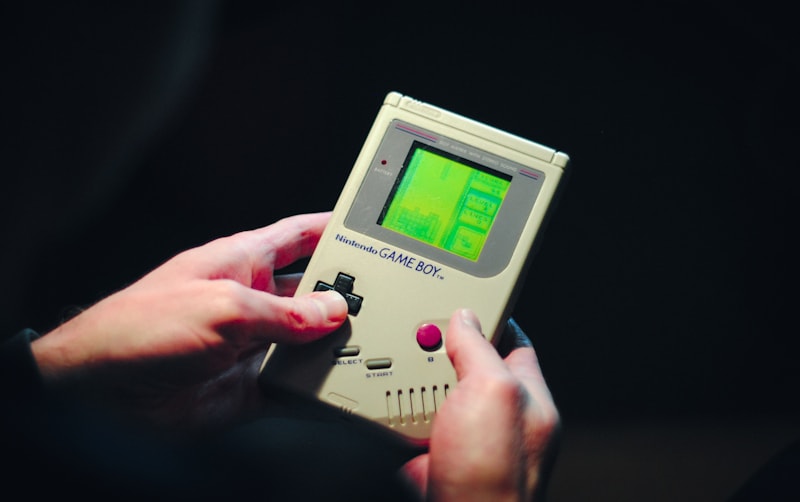 Tetris in hand — the physical experience of playing on original hardware remains distinctive. The Game Boy’s weight, the tactile buttons, and the intimate screen size all contribute to how the game feels. Photo: Nik / Unsplash (Unsplash License)
Alexey Pajitnov and the Rights
For the first decade of Tetris’s existence, Pajitnov received no royalties. The rights belonged to the Soviet state. He earned a salary and nothing more while the game he created generated hundreds of millions of dollars worldwide.
In 1996, when the Soviet licensing deal expired, Pajitnov and Henk Rogers — the same Rogers who had traveled to Moscow in 1989 — formed The Tetris Company to manage the rights going forward. Pajitnov received his first royalty payment that year, twelve years after creating the game.
The Tetris Company has since aggressively defended the franchise, including successfully arguing in court that the specific mechanics and visual design of Tetris are protectable intellectual property — a significant legal ruling for game design copyright more broadly.
How to Play Tetris Today
Tetris Effect: Connected (PC, PS4/5, Xbox, Switch) — the definitive modern version. Adds a music-synchronized visual experience around unchanged core mechanics. The best balance of atmosphere and authentic play.
Nintendo Switch Online — NES Tetris available through the NES library for subscribers. Required for understanding the competitive classic format.
Jstris (browser, free) — community-maintained browser Tetris implementing modern guideline rules. Used extensively for practice and unofficial competitive play.
Classic Tetris World Championship (ctwc.com) — annual NES Tetris tournament, held in person, with increasing viewership. The competitive documentary Ecstasy of Order (2011) provides context on the community’s origins.
Puyo Puyo Tetris 2 (all platforms) — hybrid title combining Tetris with the Puyo Puyo puzzle mechanic. Both games are implemented faithfully, with substantial single-player content.
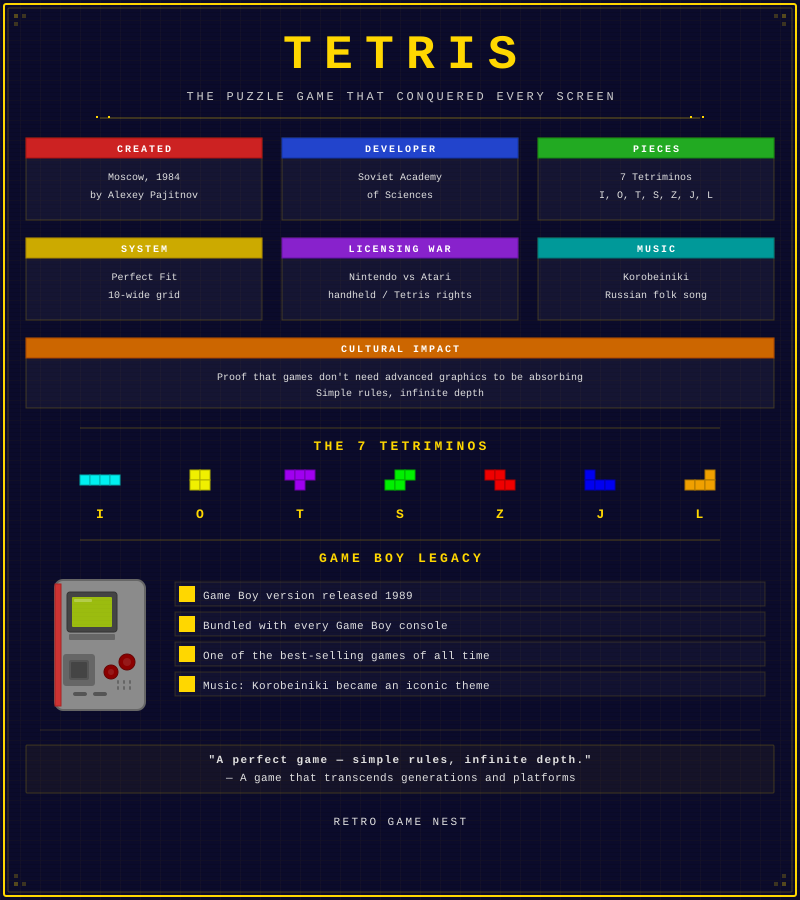 Tetris pixel art infographic — 1984 creation, Alexey Pajitnov, 7 Tetriminos, Game Boy success, and cultural influence
Verdict
NES Tetris (1989): The competitive standard. Raw, random, demanding. The format that built the modern classic Tetris scene.
Game Boy Tetris (1989): The accessible version that made Tetris what it is globally. Still playable today on original hardware or accurate emulation. The music alone justifies returning to it.
Tetris Effect: Connected (2018/2021): The best way to play Tetris now if you want a complete experience. The mechanics are unchanged; the presentation makes them feel new.
The legacy: Tetris is the proof that a game mechanic, designed correctly, does not age. The same falling pieces that held Pajitnov’s colleagues in Moscow in 1984 are holding competitive players at frame-perfect precision in 2024. No other game has demonstrated this kind of mechanical permanence across four decades.
Frequently Asked Questions
- Who invented Tetris?
- Tetris was created by Alexey Pajitnov, a computer engineer at the Soviet Academy of Sciences in Moscow. He programmed the first version on an Electronika 60 terminal in June 1984.
- Why was the Game Boy version of Tetris so successful?
- Nintendo bundled Tetris with the Game Boy at launch in 1989 instead of Super Mario Land. The game was perfectly suited to short portable sessions, worked on a small screen, and sold over 35 million copies, making it the best-selling Game Boy title of all time.
- What are the seven Tetris pieces called?
- The seven tetrominoes are: I-piece (four in a line), O-piece (2x2 square), T-piece (T-shape), S-piece (S-shape), Z-piece (Z-shape), L-piece, and J-piece. Each is typically color-coded in official versions.
- What is the best version of Tetris to play today?
- Tetris Effect: Connected (PC/consoles) is the most visually polished modern version. For classic mechanics, Tetris Effect's Classic Score Attack mode or the NES version via Nintendo Switch Online are recommended. Competitive players use the NES version or Jstris for modern guideline play.