Mega Man 2: The Blueprint for Perfect 8-Bit Action
A deep analysis of why Mega Man 2 (1988, Capcom) remains the gold standard for NES action games. Stage design philosophy, the weapon system, the legendary soundtrack, and every way to play it today.
Last updated:
Mega Man 2: The Blueprint for Perfect 8-Bit Action
Mega Man 2 should not exist. Capcom’s management did not want to make it. The original Mega Man (1987) had sold modestly in Japan and was not considered a priority. The sequel happened because a small team at Capcom worked on it during off-hours and weekends, without formal approval, as a personal project. They completed it, showed it to management, and it became one of the highest-selling NES games Capcom ever produced.
That origin story matters because it explains why Mega Man 2 feels different from games designed by committee. Every element reflects a team with a clear vision working to execute it without compromise — tighter stage design, more coherent weapon utility, more carefully constructed difficulty curves. The result set the template for the run-and-gun action-platformer subgenre and influenced a generation of developers.
The Design Challenge: Eight Boss Problem
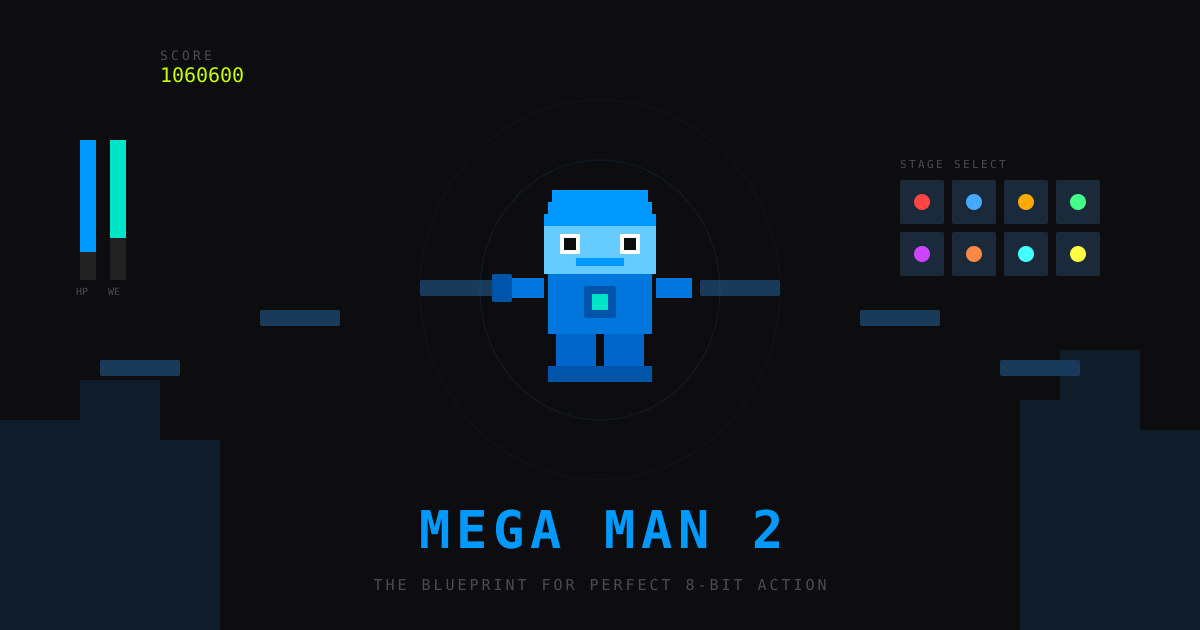
Mega Man 2 presents its core mechanic before the game begins: a stage select screen with eight portraits, no required order, no guidance. You choose. This is not padding — it is the game’s first design statement.
The eight Robot Masters are not equivalent. Each stage introduces a distinct environmental hazard and moves at a different pace. Air Man’s stage is a long, fast gauntlet of high-altitude platforms and flying enemies that punishes hesitation. Quick Man’s stage adds disappearing blocks and walls of instant-death lasers that require precise movement and quick decision-making under time pressure. Bubble Man’s stage takes place underwater, dramatically slowing movement and introducing an entirely different kinetic feel.
The non-linear structure has a secondary function: the weapon system. Each defeated Robot Master yields a weapon that functions as a key to another stage. Defeating Air Man gives you the Air Shooter, which neutralizes Wood Man. Defeating Metal Man gives you the Metal Blade, which is effective against nearly every other boss in the game and becomes the single most versatile tool in your arsenal.
Capcom balanced the weapon system so that every route is viable but no route is equally optimal. Players who discover the weakness chain feel clever. Players who ignore it and rely on the default Mega Buster feel challenged but not locked out. The system rewards knowledge without requiring it.
Stage Design: Introduction, Development, Conclusion
Every Mega Man 2 stage teaches before it tests. This is the structural principle that separates the game from simpler NES action titles that throw hazards at the player without context.
Take Wood Man’s Forest Stage. The first section introduces the leaf shield enemies and the bouncing behavior of the Atomic Fire weapon in a relatively open environment. The second section adds vertical scrolling, which changes how the same enemies behave — their patterns now carry vertical threat vectors. The boss arrives when the player has fully understood the stage’s language and can apply that understanding under maximum pressure.
Quick Man’s stage is the most technically demanding of the eight. The Disappearing Block section, which forces the player to memorize and execute a specific path while blocks vanish in sequence, is among the most skill-testing sequences in the NES library. Crucially, it is also skippable with the Flash Stopper weapon — Capcom’s way of ensuring the hardest segment does not create a permanent wall for less practiced players.
Dr. Wily’s Castle, the second half of the game, executes a tonal shift. The individual stage identity of the Robot Master sections gives way to a continuous gauntlet. The stages recycle some enemy types but configure them in denser, more aggressive patterns. The change in pacing signals that the game’s teaching phase is over.
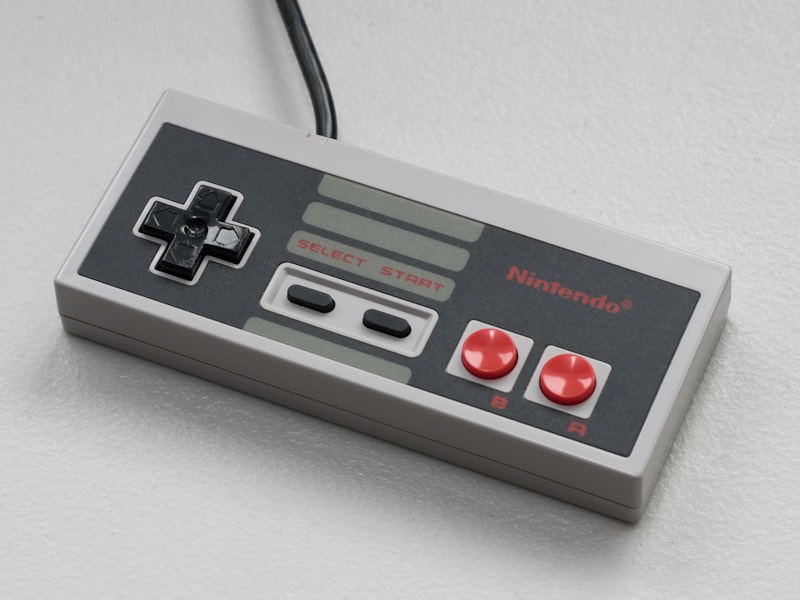 The NES controller’s D-pad and two-button layout defined how Mega Man 2 was designed — every action is achievable with left thumb for movement and right thumb for jump and shoot. Photo: William Warby / Unsplash (Unsplash License)
The Weapon System: Utility vs. Gimmick
One of the failures of many action games is that special weapons become collectibles rather than tools. Mega Man 2 largely avoids this.
The Metal Blade — Metal Man’s weapon — cuts at eight directions, costs almost no weapon energy, and can be used to stagger enemies that the Mega Buster cannot interrupt. It is the best weapon in the game by almost every metric, arguably overpowered. Capcom seems to have recognized this: in later Mega Man games, individual weapons were rebalanced to be more situationally specific.
The Quick Boomerang has infinite range on a fast, low-trajectory arc. The Leaf Shield provides brief invincibility and fires outward. The Crash Bomber is the game’s dedicated key — certain walls block all progress until destroyed with it. The Flash Stopper freezes time, converting difficult sequences into opportunities for easy damage.
Each weapon fills a role. The issue of “weapons you never use” that plagues many action games is largely absent here because Capcom designed each one around a specific scenario, even if that scenario only appears two or three times.
The energy system forces conservation choices. Every weapon draws from a separate, limited meter. Using Metal Blade carelessly empties it before a boss fight. The game teaches resource management through consequence without ever explaining the lesson directly.
The Music: Composition as Game Design
Mega Man 2’s soundtrack, composed by Takashi Tateishi (credited as “Okinosuke Yano” due to contractual limitations), is the most widely cited aspect of the game. This is unusual — most games are discussed primarily in terms of mechanics or visuals. That Mega Man 2 is remembered as much for its music as its gameplay reflects how completely the soundtrack defines the experience.
The Wily Stage 1 theme (“Wily Castle”) is the most famous track, and it earns that status. It arrives at the moment the game shifts register — the individual Robot Master stages are complete, the safety of the familiar is gone, and a new, harder challenge begins. The music announces this transition with an urgency and energy that the gameplay alone could not communicate as effectively.
Each Robot Master stage has a theme that complements its environmental design. Bubble Man’s stage has a slow, melancholy melody that matches the underwater movement speed. Heat Man’s stage has an urgent, mechanically precise rhythm that suits the industrial fire environment. Air Man’s open, upward-moving stage gets a correspondingly open, ascending theme.
The NES sound chip is being used at or near its limits here. The harmonic layering in several tracks — especially the Wily Stages — demonstrates what the hardware could do in the hands of a composer working specifically within and against its constraints.
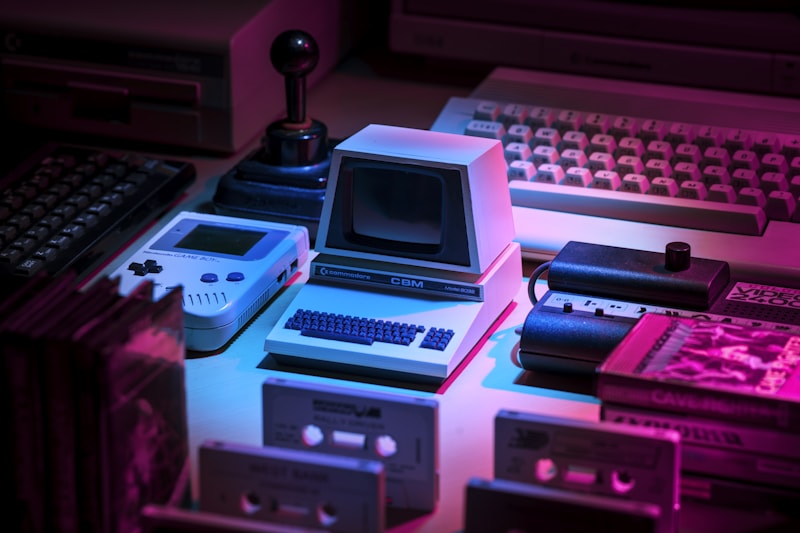 Early hardware shaped what Capcom’s developers could achieve — working within the NES’s technical constraints produced some of the most memorable sound design and level architecture in 8-bit gaming. Photo: Lorenzo Herrera / Unsplash (Unsplash License)
Difficulty and the Normal/Difficult Split
Mega Man 2 shipped in Japan in 1988 with a single difficulty setting. For the international release, Capcom added a Normal mode that reduces the damage Mega Man takes from enemy hits. The Japanese original became the international Difficult setting.
This split was controversial among hardcore players at the time, but it made the game more approachable without fundamentally altering the design. The stage layouts, enemy placements, and boss patterns are identical on both settings. The difference is purely in survivability margin.
The result is a game that functions at two distinct difficulty registers without requiring two different designs. On Normal, the game is hard but manageable for players who have experience with NES action games. On Difficult, it demands consistent execution and near-perfect play by the Wily Stages.
The Password system — which allows progress to be saved between sessions — was another accessibility concession that extended the audience without affecting the core design. Eight Robot Master slots, weapon energy tanks, and E-Tanks (extra energy) are all tracked. The system is inelegant compared to battery save or modern save states, but it made the game completable for players who could not sustain hour-long uninterrupted sessions.
The Blueprint: What Mega Man 2 Established
The design principles Mega Man 2 executed became the template for the run-and-gun action genre for most of the 8-bit and 16-bit era:
- Non-linear stage selection that rewards knowledge without requiring it
- Weakness chain systems that incentivize exploration and experimentation
- Stage design as tutorial — introduce, develop, test
- Multiple difficulty registers through damage scaling rather than layout changes
- Distinct boss personalities communicated through environment and theme before the fight begins
Developers at Nintendo, Konami, and elsewhere explicitly cited Mega Man 2’s structure when describing their own work in later years. The game’s influence runs through action games as diverse as Kirby’s Adventure, Shovel Knight, and Hollow Knight — all of which use stage select structures or weakness systems that trace back to Capcom’s 1988 template.
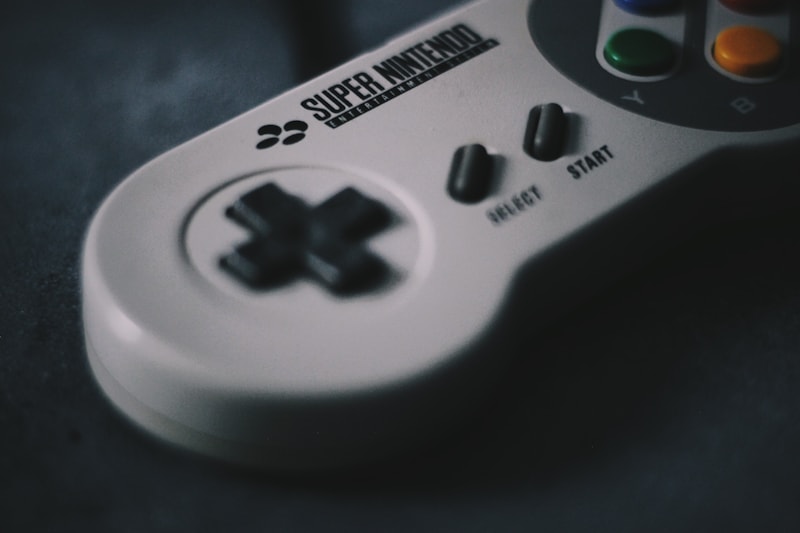 The action-platformer genre that Mega Man 2 helped define extended through the 16-bit era — the SNES era continued and refined the design language Capcom established on the NES. Photo: Kamil Switalski / Unsplash (Unsplash License)
How to Play Mega Man 2 Today
Mega Man Legacy Collection (PC/Switch/PS4/Xbox One) is the recommended route. It includes all six NES Mega Man titles with accurate emulation, screen filter options, a rewind function, and challenge content. The collection is frequently discounted and represents significant value.
Nintendo Switch Online (NES library) includes Mega Man 2 for active subscribers. The emulation is accurate. This is the lowest-friction entry point if you already have a Switch subscription.
For original hardware purists, Mega Man 2 cartridges are widely available at modest prices. The game’s popularity means complete copies are common in the retro market.
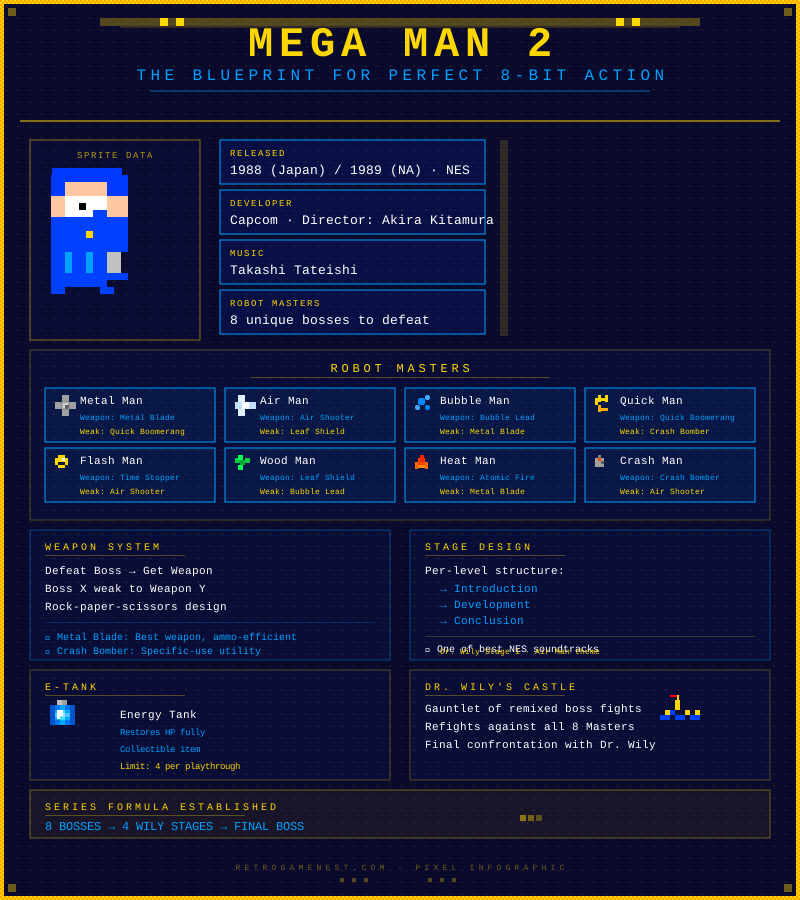 Mega Man 2 pixel art infographic — 1988 NES release, 8 Robot Masters, weapon system, and stage design blueprint
Verdict
Mega Man 2 (1988, Capcom/NES): The game that turned a moderate first entry into a franchise template. Its mechanics are still taught in game design courses. Its music is still performed in concert halls. Its stage structure influenced three decades of action game design.
On Normal difficulty: accessible enough to be completed by players with moderate NES experience, challenging enough to feel earned.
On Difficult: demanding by any standard, with the Wily Stages testing everything the game has taught you.
Play it. If you have any interest in action game history or the design lineage of the genre, Mega Man 2 is the primary source document.
Frequently Asked Questions
- Is Mega Man 2 the best game in the series?
- Mega Man 2 is widely considered the high point of the original NES series for its balance of difficulty, stage design, and music. Mega Man 3 introduced mechanics some players prefer, and Mega Man 9 and 11 are strong modern entries, but Mega Man 2 remains the most cited first recommendation.
- How hard is Mega Man 2 compared to the first game?
- Mega Man 2 is significantly more accessible than Mega Man 1 on Normal difficulty. Capcom added a Normal mode (called Easy in some regions) specifically to broaden the audience. The Difficult setting removes damage reduction and provides the original intended challenge level.
- What is the correct boss order in Mega Man 2?
- The most efficient weakness chain is: Metal Man → Air Man → Crash Man → Flash Man → Quick Man → Wood Man → Bubble Man → Heat Man. Metal Man's weapon is effective against almost every boss, making him the optimal starting point.
- Where can I play Mega Man 2 today?
- Mega Man Legacy Collection (PC, Switch, PS4, Xbox) includes Mega Man 1 through 6 with filter options, rewind, and challenge content. The game is also available individually on Nintendo Switch Online (NES library) for subscribers.